Mostrando entradas con la etiqueta música. Mostrar todas las entradas

sábado, 9 de junio de 2018

Speak (Latham, 1962)

 "It will live in your mind". -- Ray Durgnat.
Dura 10 minutos. Reseña vía Kenneth Goldsmith--
Being obsessed with this recording I did a search of the forum archives and only saw two or three mentions of it. I imagine that lots of fans aren't aware it exists. IMO this is the Floyd holy grail. It also might be the most obscure Pink Floyd recording of all. As far as I know none of the members of the Floyd have even mentioned it in interviews. 
A little back-story...John Latham was one of the more controversial conceptual artists in the 1960's (think Yoko Ono, Fluxus). A couple of Latham's films, most notably Speak, were projected behind the Floyd's live set at the International Times launch at the Roundhouse in October '66 and later at a few shows in early 1967. He also had something to do with a 1/67 gig at the Commonworth Institute in London. It was mentioned in a local paper but the description it pretty vague. Anthony Stern thought he did some sort of set design. Back to the soundtrack. 
Speak is an 11 minute animated film that was known for it's intense flicker/strobe effect when shown in London area psychedelic clubs. That being the case Latham thought the Floyd would be a good match for its soundtrack. 


[h/t]

viernes, 20 de abril de 2018

James Booker es un bodhisattva

His genius, though, often took second place to his waywardness. Various musicians attest to Booker's madness and self-sabotage, as well as the drug busts and no-shows that harmed his career. He toured East Germany wearing an afro wig stuffed full of marijuana and once appeared on stage at Tipitina's in New Orleans wearing a nappy fastened by a huge gold pin. Musician David Torkanowsky recalls the moment: "From behind the nappy, he pulls out a .357 Magnum, puts it to his own head and announces to the audience, 'If somebody doesn't give me some cocaine right now, I'm going to fucking pull the trigger.'"  Vía Sean O'Hagan

sábado, 1 de julio de 2017

Caldo de Hipocrene (Ed. Disonante, 2017)

Adaris García, diseño & montaje; Manuel Almeida, editor. 
     Aunque inmerso dentro de la ciencia ficción, Caldo de Hipocrene de Miguel C. Adrover Lausell, goza de una libertad monstruosa que le permite desplazarse por distintas rutas (tangibles y metafóricas, de categoría y registro, de lo real y lo imaginario, de forma y contenido, de palabra y música, de poesía y ciencia, del futuro y del pasado, de tiempo y espacio) que va destruyendo a la misma vez que las construye. 
     Este Caldo se lee o se bebe, que aquí es lo mismo, a tres tiempos y de muchas formas: en un 2015, en un 2017 y en un 2077 que giran alrededor de la sed/sequía/escasez que hay, que habrá y que hubo en Puertorro. Las voces se confunden y no sabemos quién ni cuándo ni de dónde se nos transmite. Bien podría ser Miguel Adrover Lausell, ente atemporal, emisario de los tiempos y autor en propiedad del libro o muy bien podría ser Pitia Ω, la primera inteligencia artificial que hackeó o que hackeará o que ahora mismo está hackeando la computadora de nuestra Vía Láctea. En casos como estos, lo que realmente importa es el mensaje y este llega en alta definición. 
     Con Caldo de Hipocrene Miguel Adrover Lausell se abre paso dentro de las letras puertorriqueñas.
     -- Juanluís Ramos, autor de Reyerta TV y Shadowplay.

Libros ACLibrería Laberinto & La Mágica tienen Caldo de Hipocrene. Aquí se puede conseguir desde cualquier parte del mundo. Tengo 15 copias firmadas a 15 dólares c/u; acepto ATH Móvil & cubro el costo del shipping (solamente en PR). Muchas piezas del poemario tienen links que llevan a Spotify; recomiendo Google Chrome para manejarlos. 

Abajo están todas las canciones que aparecen en el libro--

jueves, 22 de junio de 2017

Les liasons dangereuses (Roger Vadim, 1959)

R. Vadim se casó con Brigitte Bardot & Jane Fonda; dirigió Barbarella
Les liasons dangereuses no es la favorita de muchos, pero se filmó a finales de los 50.
Estaban pasando muchas cosas cabronas en el jazz. La película, basada en una novela del 1782, cogió pon con Art Blakey & Thelonious Monk
The film centers around Valmont and Juliette de Merteuil, a married couple who aid each other in pursuing extramarital affairs. "Pannonica" scores the scene in which Valmont first meets Cécile, the young woman who becomes his newest pursuit. As their eyes meet, the music enters. While Monk's dissonant blue notes suggest Valmont's darker character, saxophonist Charlie Rouse truly sets the tone for the song, tapping into his tenor's reedier sonorities to underscore Valmont's seedy intentions. "Pannonica" hints at the delight and despair to come, as Monk's twisting blend of bitter melancholy and sweet romance sets the tone for the rest of the film and the rest of the score. Vía NPR


Dangerous Liasons; dirigida por Roger Vadim:


h/t

martes, 6 de junio de 2017

Sharkey's Night (Laurie Anderson/William S. Burroughs)

Abe Frajndlich 1984/2013 (vía)
Sun's going down. Like a big bald head.
Disappearing behind the boulevard. (Oooeee.) It's Sharkey's night.
Yeah. It's Sharkey's night tonight. And the manager says: Sharkey?
He's not at his desk right now. (Oh yeah.) Could I take a message?

And Sharkey says: Hey, kemosabe! Long time no see.
He says: Hey sport. You connect the dots. You pick up the pieces.
He says: You know, I can see two tiny pictures of myself
And there's one in each of you eyes. And they're doin' everything I do.
Every time I light a cigarette, they light up theirs.
I take a drink and I look in and they're drinkin' too.
It's drivin' me crazy. It's drivin' me nuts.

And Sharkey says: Deep in the heart of darkest America.
Home of the brave. He says: Listen to my heart beat.
Paging Mr. Sharkey. White courtesy telephone please.*

*Lyrics vía

viernes, 17 de febrero de 2017

Reseña de Somos Anormales (Residente, 2017)

El vídeo está cabrón, controversial & pico.
La canción es uno de los resultados de las secuencias desoxirribonucleicas de René. Los códigos bailan en nuestras células —cada uno de nosotros tenemos trillones de ellas, y en cada una hay sobre 2 metros de información—. De todo este baile emerge la música de la vida. Líneas como cromosomas bailando boleros son acertadas poética y científicamente. Eso mismo pasa cuando se enrolla, literalmente, el ADN. Un cromosoma es un pen drive bioquímico, resultado de proteínas que enrollaron ADN, una enorme molécula capaz de hacer algo que ninguna otra puede hacer por su cuenta: reproducirse. [Para continuar leyendo en Revista Cruce, haga click aquí]

martes, 20 de diciembre de 2016

martes, 22 de noviembre de 2016

Música de la 1ra temporada de Westworld (Djawadi, 2016)

Vía
El episodio de Westworld (Nolan/Joy, 2016) del domingo pasado estuvo cabrón. Faltan dos episodios. Ahora Bernard sabe que está a la merced de Ford. Bernard mata habitualmente. Sus memorias no son suyas, fueron escritas -- códigos en una máquina de Feynman, mezcla caldo, protoplasma & genoma. Bernard está en loops recursivos para cumplir los fines de Ford -- un dios que ve bello el llanto de una madre por la muerte de su hija. 

La música del show siempre tiene algo que decir en cada episodio. Cuelgo un EP del soundtrack, primera temporada -- también es código en función de un agente: el piano (mi robot favorito de la serie, después le sigue Maeve): 
""It's got a robotic harshness to it which is very distinctive. When a human plays it, the dynamics are modified. But when the player piano hits a note, it's always the same." It’s the same when a robot host plays the piano, Djawadi said, which makes the host player redundant. Why would Dr. Ford keep one in his office, then? "Maybe to keep him company!" Djawadi laughed. "And it shows his control, as well. This is his world. He created everything."--Vía

miércoles, 9 de noviembre de 2016

esto está pasando -- un playlist de Spotify

Detalle del Infierno, parte de la Mesa de los siete pecados capitales del Bosco (o aprendiz). 


h/t a @Arturo_Ulises por No Vayas a Votar.

domingo, 23 de octubre de 2016

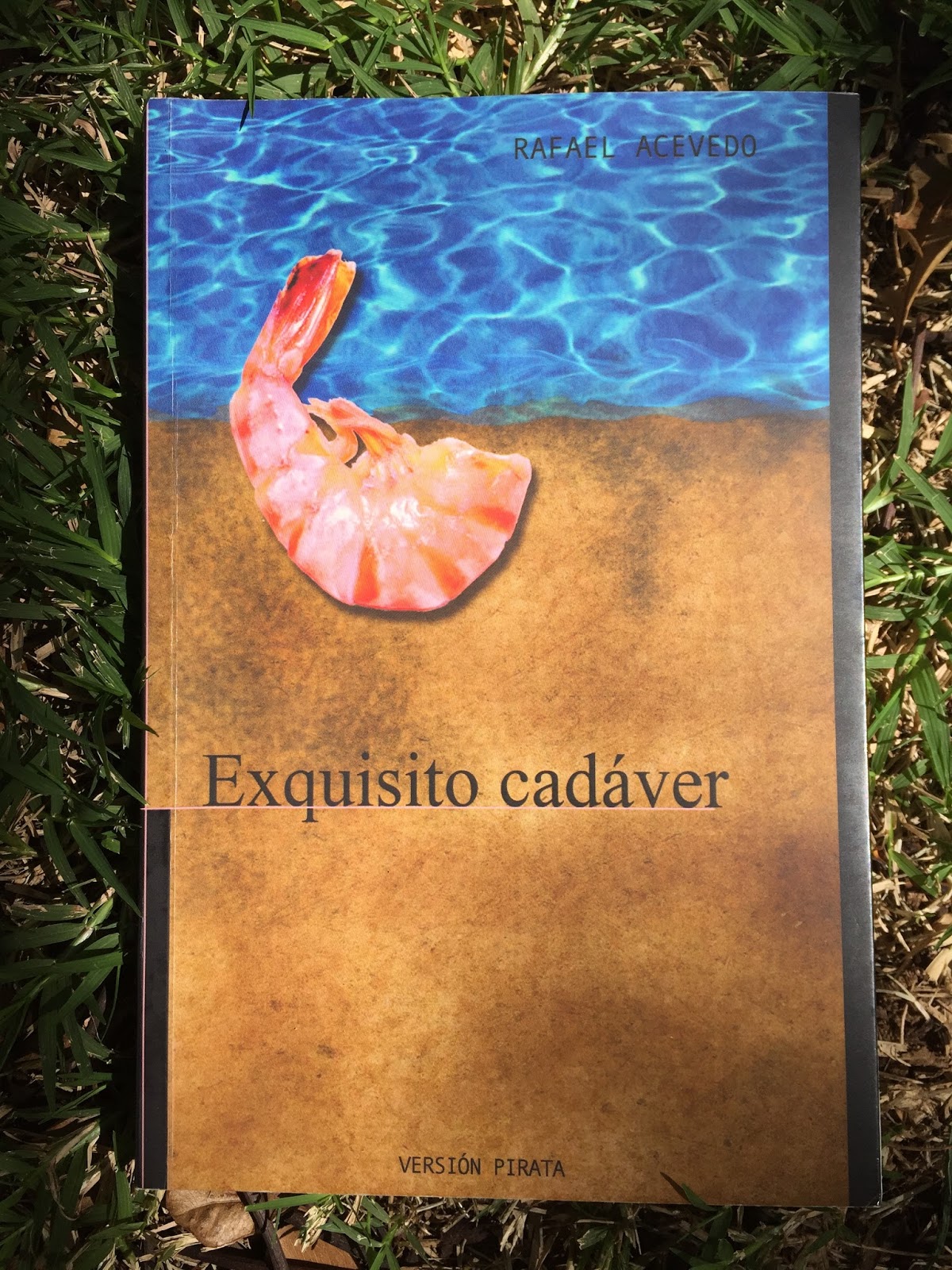
Fragmento de Exquisito cadáver (Rafael Acevedo, 2001)

Amazon
Síndrome de Elpenor---
Uno reproduce, según he leído, el vértigo de caer como una gran escultura de Dios a manos de un iconoclasta. Hay una breve, aunque angustiosa, amnesia topográfica. Las coordenadas temporales se difuminan. Pero poco a poco regreso a mi habitación. La ropa en el suelo, el olor a incienso, los discos 

sábado, 2 de julio de 2016

Cortázar & Parker

La música me sacaba del tiempo, aunque no es más que una manera de decirlo. Si quieres saber lo que realmente siento, yo creo que la música me metía en el tiempo. Pero entonces hay que creer que este tiempo no tiene nada que ver con... bueno, con nosotros, por así decirlo -- Johnny, o Ch. P, en El perseguidor; está en Las armas secretas.